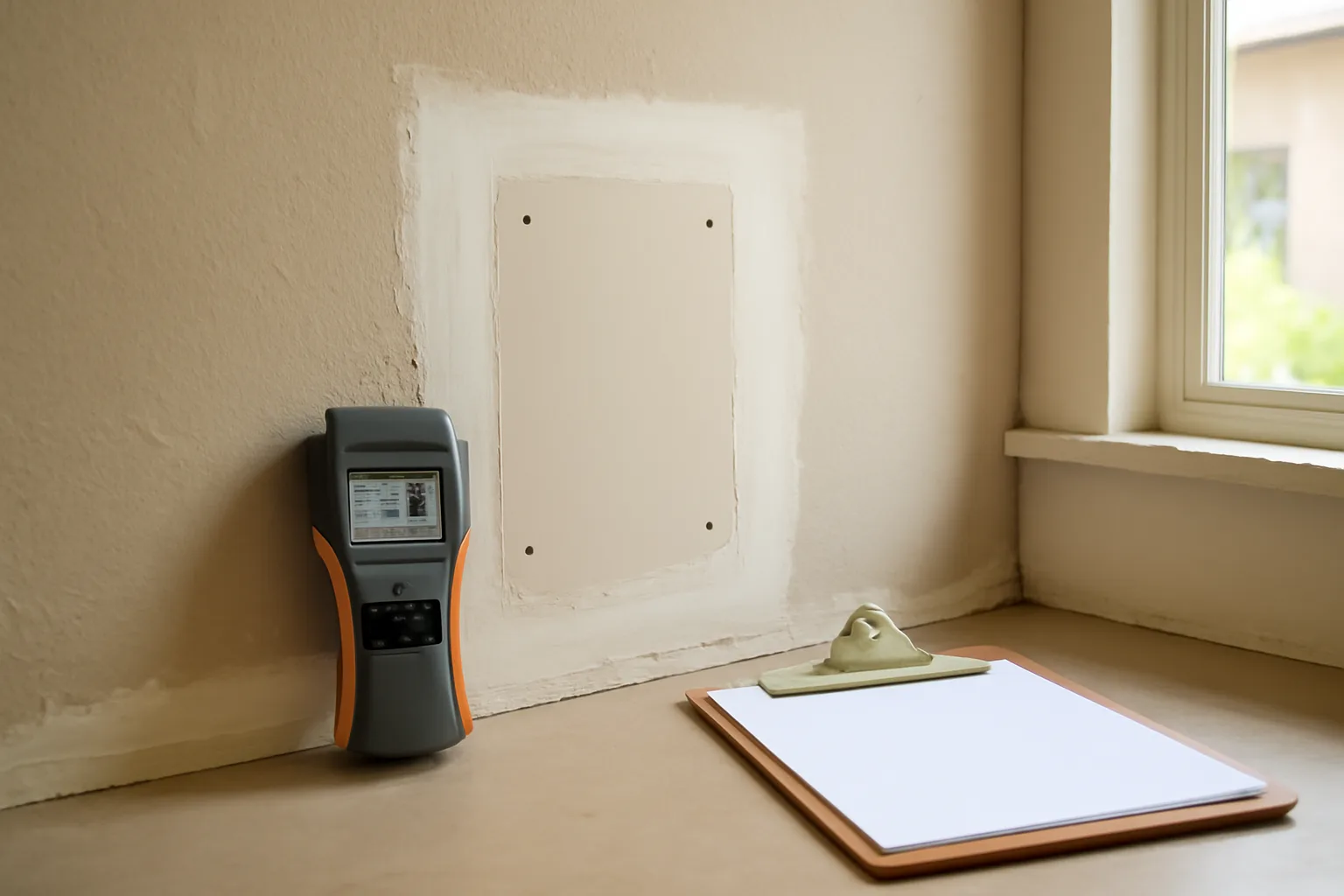
Once the structure reads dry by the meter in Gloucester City, the next job is putting the home back together. We replace what came out — subfloor, drywall, insulation, trim — and finish to match what was there before the loss. In Gloucester City the rebuild approach changes with the building’s age, from plaster repair to modern drywall replacement. The claim packet links every replaced assembly to what the loss removed, leaving no gap between mitigation and rebuild. Call 551-237-7446 — one accountable team beats juggling three separate trades.
How The Shell Becomes Livable Again
A property is only half recovered when the drying ends; the other half is the reconstruction that follows. In older homes the rebuild means matching period trim, repairing plaster, and scribing trim to out-of-square framing rather than dropping in stock.
The crew that pulled out the wet drywall in week one is the crew installing the new drywall in week three — no second contractor to chase. Before-and-after photos of every rebuilt assembly back the finished scope, so the carrier funds the full restoration.
How Long Putting It Back Takes
The reconstruction timeline starts once the structure is verified dry and the rebuild scope is approved. We coordinate with the adjuster through the rebuild, so the approved scope and the work in the field stay matched at every stage.
Keeping the work in-house means the rebuild starts the moment the structure is dry and the scope is approved. The reconstruction ends with the owner walking the finished space, not with a crew leaving a punch list behind.
Why We Keep The Rebuild In-House — In Plain Terms
The reconstruction is the back end of the same job, not a separate project handed off to a stranger. One company through both phases means no waiting on a separate contractor to schedule the rebuild after drying ends.
We do not hand the rebuild to a subcontractor and disappear; the team that dried it finishes it. You deal with one phone number from the emergency call through the final coat, every step documented along the way.
When a water crew dries the structure and a different contractor rebuilds it, the gap between them is where recoveries stall. One team means one timeline, one scope, and one company answerable for the whole result rather than a piece of it. We keep the mitigation crew and the rebuild crew under one roof, so the handoff never costs you time or opens a scope gap. Keeping the job under one roof means the rebuild is scoped against the mitigation file, not renegotiated from scratch.
What Putting It Back Involves — The Short Version
After extraction and drying are finished, the rebuild phase decides how the whole event actually ends. We replace the assemblies that came out, blend new paint and flooring into the surrounding rooms, and finish to match.
Before-and-after photos of every rebuilt assembly back the finished scope, so the carrier funds the full restoration. The job closes with a walk-through against the original scope, so the finished work ties back to the documented loss.
A verified-dry shell still needs framing repair, drywall, trim, and finish work before it is livable again. A documented rebuild that matches the approved scope is what closes the claim cleanly at the end. The rebuild scope links every replaced assembly to what the loss removed, leaving no gap between mitigation and reconstruction. Reconstruction runs from framing repair through finish carpentry, drywall, trim, and paint, sequenced so each trade follows cleanly.
The Sequence From Sign-Off To Finish — Honestly
The timeline is driven by the size of the loss and the lead time on matching materials, not a fixed number of days. The reconstruction estimate is tied to the mitigation documentation, which keeps the carrier and the build on the same scope.
Because one team carries both phases, there is no waiting on a separate contractor to schedule the rebuild after mitigation ends. The job closes against the original scope, room by room, so the finished work ties back to the documented loss.
The timeline is driven by the size of the loss and the lead time on matching materials, not a fixed number of days. We carry the project to a final walk-through, so the rebuild ends with a finished space rather than an open punch list. We do not hand the rebuild to a subcontractor and disappear, so the schedule stays under one accountable team. We keep the claim and the build in step, submitting any supplements with documentation so a hidden condition does not stall the job.
How this fits the bigger recovery
Property losses in {city} tend to bleed across categories — reconstruction often overlaps with water removal, fire and smoke recovery, storm damage restoration, air quality remediation, sewage backup recovery, and one team works it from mitigation through rebuild. We carry the identical standard to and everywhere else across area.
If you searched for a restoration crew near you, When you reach out, a real person takes the call, and the job gets done right. Call 551-237-7446 any hour, read Sewer Backup in Gloucester City? Why Speed and Safety Both Matter on our blog, or head back to our Gloucester City home page to see everything we do.